Roof Leaks and Ice Dams
Ice dams form when snow melts on a warm roof and refreezes at the cold eaves, backing water under the shingles. On Kingston's low-pitch 1970s roofs the stain usually appears where the exterior wall meets the ceiling.
A spreading brown stain or a ceiling that has started to sag needs more than a coat of paint. Kingston Drywall Pros repairs water damaged drywall and ceilings for homeowners, landlords and property managers across Kingston and nearby towns.
Water damage repair is a sequence: confirm the leak is fixed, find how far the water travelled, dry the framing, then rebuild. Skipping any step is how the same stain comes back a month later.
We see the full range here, from ice dam leaks on 1970s bungalows to burst supply lines in exterior walls and flooded basements after a spring thaw.
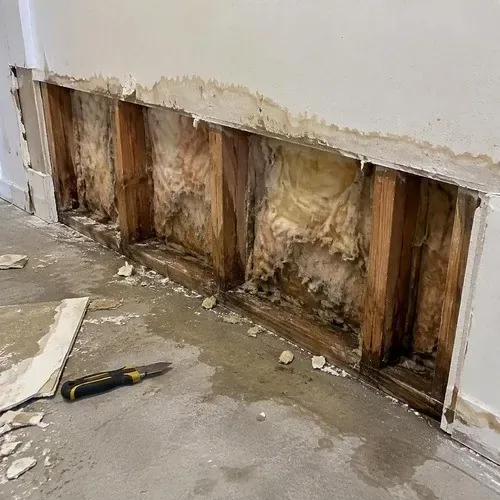
Water damage drywall repair is the removal of wet or stained gypsum board, drying of the cavity, and installation and finishing of new board so the wall or ceiling looks untouched. It covers both walls and ceilings, from a single stain to whole rooms after a flood.
It is for homeowners and landlords dealing with a leak, and for restoration companies that need a drywall trade once drying is complete. Each job includes:
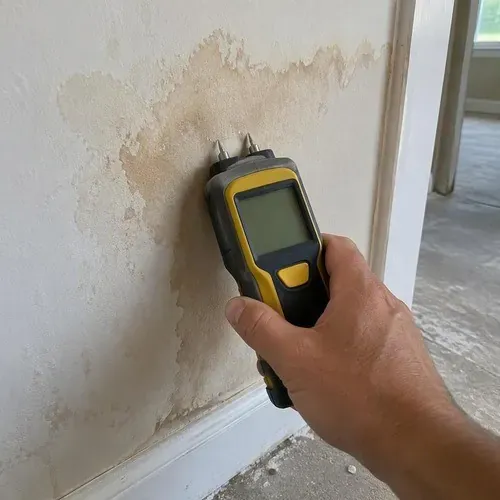
Painting over a water stain fails because the tannins and minerals left by the water are water soluble and bleed straight through latex paint, usually within weeks. The board behind the stain may also still be damp or growing mould on its back face.
A proper repair removes damaged board, dries the cavity and seals the new surface with a shellac or oil-based stain blocker such as Zinsser BIN. Only then does paint stay clean.
Free written quotes with the finish level spelled out.
The cause decides where the damage shows and how much board has to come out.
Ice dams form when snow melts on a warm roof and refreezes at the cold eaves, backing water under the shingles. On Kingston's low-pitch 1970s roofs the stain usually appears where the exterior wall meets the ceiling.
Supply lines in exterior walls and crawlspaces freeze in a hard January. The wall can look fine until the pipe thaws and soaks the insulation and board from inside.
A failed toilet seal, tub overflow or washer hose soaks the ceiling of the room below. This is the classic round stain on a main-floor ceiling.
Gypsum wicks water upward like a sponge. We cut board 12 to 24 in. above the visible water line, because the bottom foot almost always has to go.
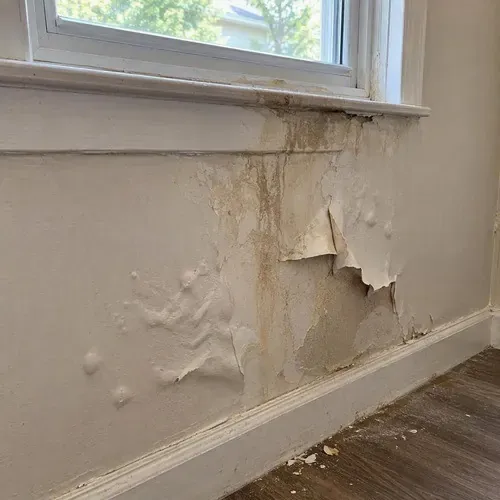
Wind-driven rain off the lake gets past poor flashing and shows as bubbling paint below a window corner. It keeps returning until the flashing is fixed.
An undersized or missing exhaust fan leaves moisture on cold exterior walls and ceilings. The result is peeling paint, stained corners and eventually mould.
Hidden water damage usually shows up as one of six signs before a stain ever appears. If you notice any of them, have the wall checked with a moisture meter:
We start only after the leak is repaired and confirmed dry, because we are drywall specialists, not roofers or plumbers. Boarding over an active leak means paying for the same repair twice.
If you do not have a roofer or plumber, ask us. We can suggest local trades, but you hire them directly so their warranty stays with them.
Water still dripping? Shut off the supply at the main valve, turn off power to any wet fixtures, and call a plumber or roofer first. Then call us.
Send us a few photos for a faster estimate.
Water damage repair runs in five steps, and the drying step is the one cheap contractors skip.
We find the true wet edge with a moisture meter and by sounding the board, not by guessing from the stain.
Plastic containment and floor protection go up first. Wet board and insulation are cut out cleanly and bagged.
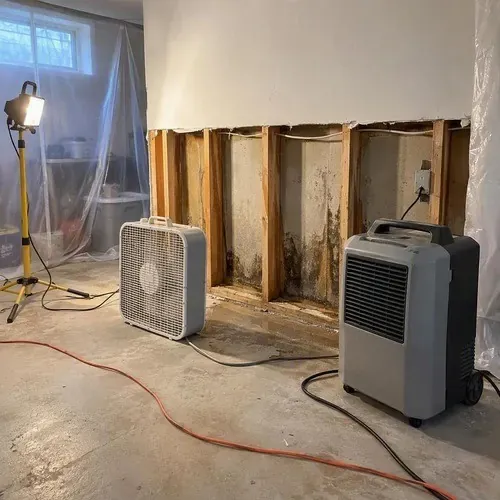
Framing must read dry before new board goes on. Boarding over damp studs is the top cause of callbacks and hidden mould.
New board matches the existing thickness, moisture resistant where it belongs, then taped and finished.
A shellac or oil-based stain blocker seals the area, then stipple or knockdown is matched to the ceiling.
Small patches of surface mould under about one square metre can be removed as part of the repair. Larger or recurring growth, or mould spreading across several stud bays, needs a professional mould remediation contractor first.
Those size thresholds follow Health Canada and CMHC guidance. We do not hold mould remediation certification, so we refer that work out and rebuild once the space is cleared.
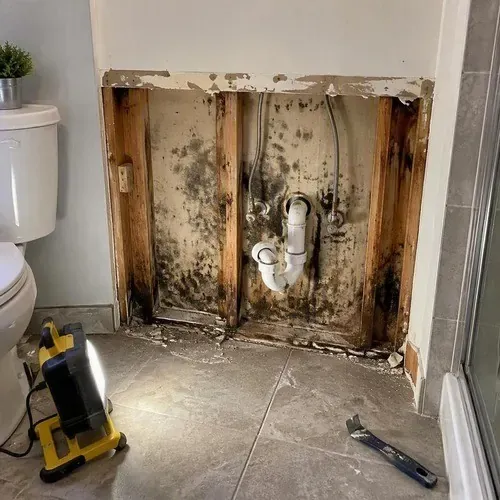
We supply what adjusters typically ask for: photos before demolition, moisture readings and a written estimate broken out by area. On larger losses, a restoration company handles extraction and drying first.
We come in once the drying equipment is removed and rebuild to pre-loss condition. Invoices are normally paid by the homeowner and claimed back; ask before work starts if your adjuster wants something different.
Talk to a drywall specialist, not a call centre.
Water damage repair is priced by the affected area, then adjusted for two big multipliers: ceiling versus wall, and textured versus smooth.
| Affected area | Typical scope | What raises the cost |
|---|---|---|
| Small spot | A single stain or patch under 2 ft across | Ceiling rather than wall; textured rather than smooth |
| Section | Part of a wall or ceiling cut back and rebuilt | Insulation and vapour barrier replacement |
| Full room | Whole ceiling or lower walls after flooding | Emptying the room, texture matching the full surface |
| Multiple rooms | Burst pipe or roof leak across floors | Staging, restoration coordination, drying time |
Straight answers to the questions we hear on site visits every week.
Framing should read dry on a moisture meter before new board goes on, which usually takes two to five days with fans and a dehumidifier. A basement flood in humid weather can take longer.
Sometimes. Board that got briefly wet from clean water and is still firm can be dried in place; soft, sagging or stained-through board, or anything from a sewer backup, must be replaced.
Not if it is sealed with a stain-blocking primer first. Latex primer alone will not stop it.
Sudden and accidental damage, such as a burst pipe, is usually covered. Gradual leaks, seepage and overland flooding depend on your policy and endorsements.
Call rather than using the form. We answer from 7:00am to 9:30pm Monday to Saturday and 9:00am to 8:00pm Sunday, and we will give you a realistic arrival time on the call.
Most water losses touch more than one surface. See ceiling repair for sagging ceilings, drywall repair for smaller patches and textured ceiling repair when stipple needs matching.
Older homes with wet plaster need plaster repair, and flooded basements usually lead to basement drywall with moisture resistant board.
If a stain is spreading or a ceiling is sagging, call first so we can talk you through what to do right now. The form is best for damage that has already stopped.
Tell us whether the leak has been repaired and include photos of the stain.