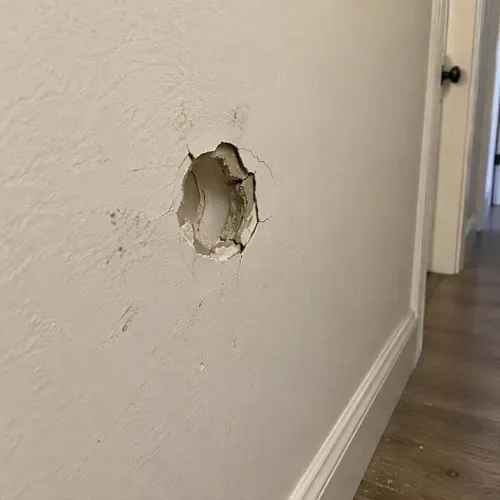
Doorknob and Furniture Holes
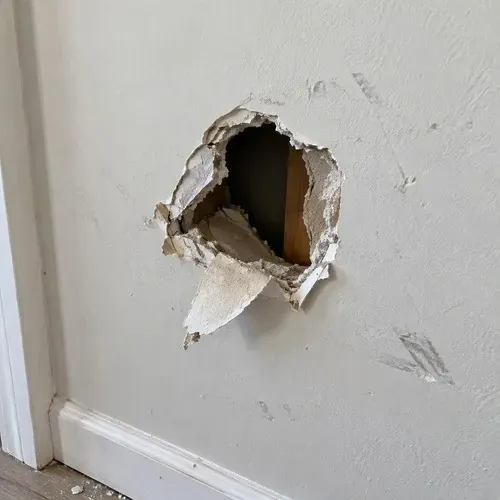
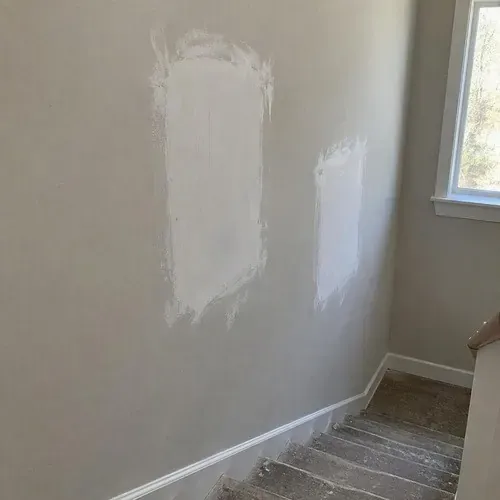
Impact holes are the most common repair we do. Small ones get a California patch, mid-size holes a backed patch, and larger damage is cut back to the studs and blocked.
Doorknob holes, cracks over a doorway, nail pops and stained ceilings are the everyday work of Kingston Drywall Pros. We repair walls and ceilings for homeowners, landlords and property managers across Kingston and the surrounding towns.
Repair is its own skill, separate from installation. The patch has to match the thickness, texture and sheen of a wall that may be decades old, and it has to stay put through Kingston's seasonal humidity swings.
A lot of our repair calls are second attempts: a DIY or handyman patch that shows as a raised square under the paint. We fix those by cutting back to sound board and doing it properly.
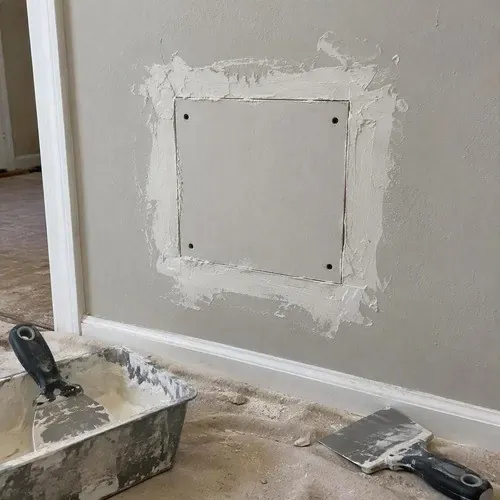
Drywall repair means cutting out or filling damaged gypsum board and finishing the area so it blends invisibly with the surrounding wall or ceiling. We repair everything from a single nail pop to a full ceiling section.
It is for homeowners fixing everyday damage, landlords turning units between tenants, and anyone selling a home who needs walls ready for listing photos. Each repair includes:
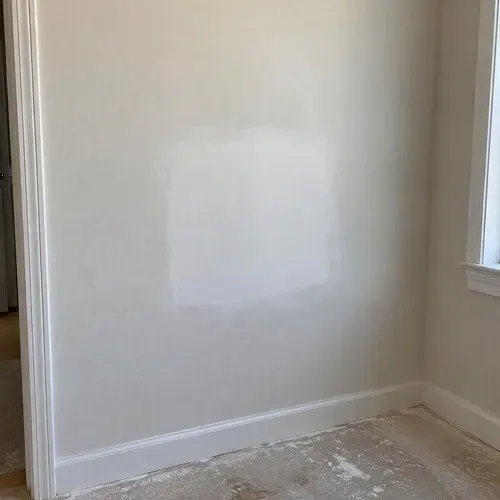
The cause of the damage decides the repair method, so every card below pairs a cause with its fix.
Impact holes are the most common repair we do. Small ones get a California patch, mid-size holes a backed patch, and larger damage is cut back to the studs and blocked.
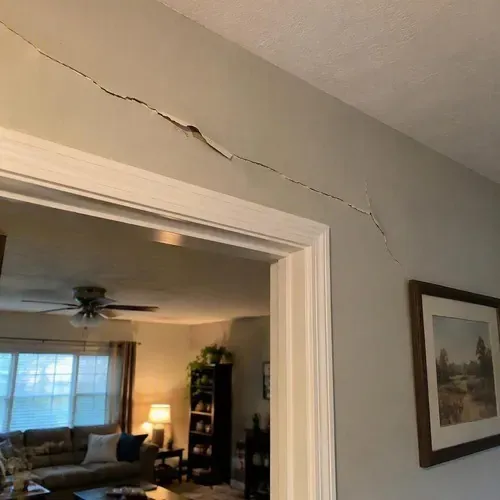
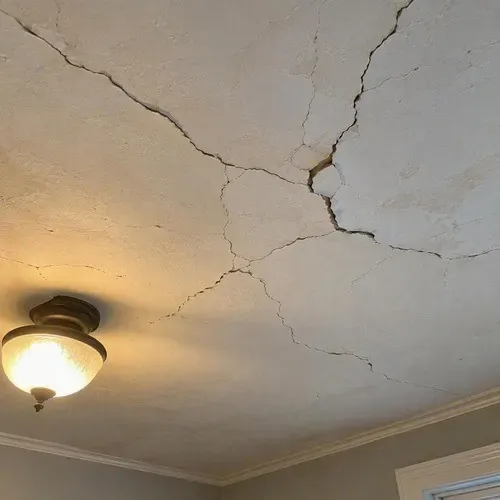
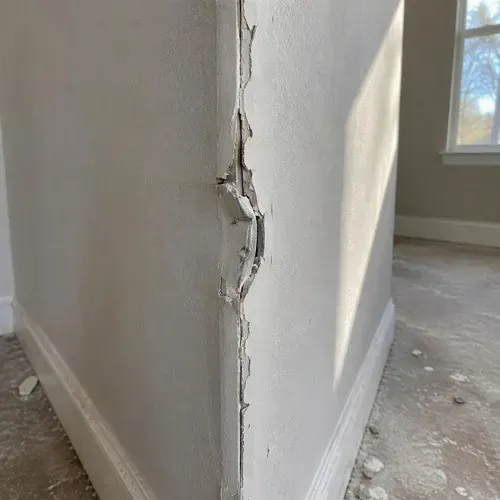
Diagonal cracks at door and window corners come from framing movement as humidity swings off Lake Ontario. We open the crack, bed paper tape or mesh in setting compound and feather it out.
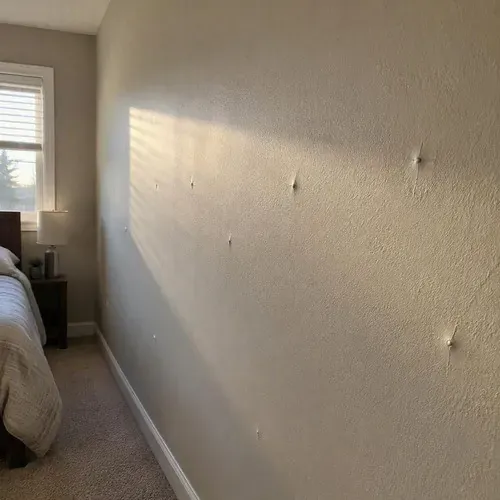
Nail pops are small bumps where a fastener has pushed through the paint, usually in years two and three of a new build as lumber dries. We drive a new screw beside it rather than hammering the old one deeper.
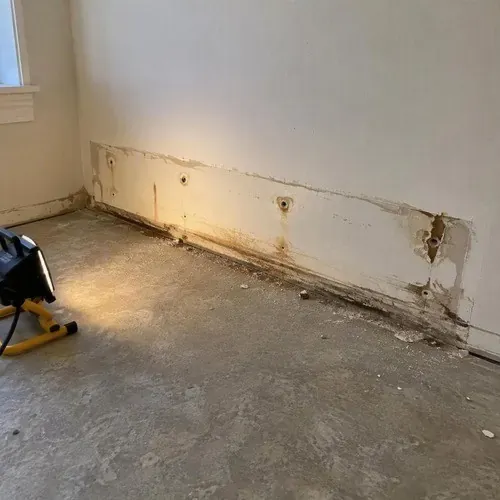
Water damage needs the leak fixed first, then cutting back to dry board and a stain-blocking primer. Larger losses are covered on our water damage drywall repair page.
Downtown and in Sydenham Ward many walls are lath and plaster, not drywall. They need plaster washers and setting compound; see plaster repair.
Trades open walls but rarely close them properly. We patch access holes after the work is done, and landlords can book several units in one trip.
Free written quotes with the finish level spelled out.
The right patch depends on the size of the hole and whether there is framing behind it. Using the wrong method is the main reason patches crack or sink later.
| Method | How it works | Best for |
|---|---|---|
| Fill and tape | Setting compound and paper tape over the crack or dent | Nail pops, hairline cracks, small dents |
| California patch | A board piece with its paper face left on to act as tape | Holes up to about 4 in. |
| Backed patch | A wood or backer strip behind the opening holds a fitted board piece | Holes 4 to 8 in. between studs |
| Cut back to studs | Damage cut to the nearest framing and a new section fastened | Large holes, water damage, sagging areas |
| Self-adhesive mesh | Fibreglass mesh tape over a small crack | Short-term fixes only; it cracks again on moving joints |
Setting-type compound, such as Sheetrock Easy Sand or Durabond, hardens chemically and shrinks far less than premixed mud. We use it for every first coat on a repair.
A typical repair takes two short visits, with containment and clean-up built into every step.
Email photos for a fast estimate on small repairs, or book a visit for anything structural or water related.
Drop sheets, plastic over furniture and zip doors where needed. Sanding uses vacuum extraction.
Damaged board is cut to a clean shape, backed, and patched with board of matching thickness.
Setting compound first, then feathered coats, sanded flat and textured to match.
The patch is primed, the area vacuumed and the drop sheets removed, leaving a paint-ready wall.
A patch shows when its surface is higher, rougher or more absorbent than the wall around it. The three usual causes are a narrow feather, missing primer and an unmatched texture.
We feather each coat well past the damage, often 12 in. or more on ceilings, so there is no edge for light to catch. Then we spot prime with a drywall primer so the patch does not "flash", which is a dull or shiny halo where the paint absorbs differently.
Send us a few photos for a faster estimate.
Drywall repair is priced by the size and type of damage, from a small patch to a full ceiling. We confirm the band from photos or a quick visit, and the quote states whether priming and paint are included.
| Repair band | Typical examples | What moves the price |
|---|---|---|
| Small patch | Nail pops, anchor holes, doorknob dents | Number of spots, texture, travel within the city |
| Medium patch | Holes up to about 6 in., cracks over a door | Backing needed, ceiling versus wall, height |
| Panel replacement | A section cut back to studs and re-boarded | Outlets and switches in the section, corner bead |
| Full ceiling | Stained or sagging ceiling replaced | Room size, texture match, emptying the room |
A repaired wall usually needs painting corner to corner. Touching up only the patch leaves a visible sheen change, even with the original paint.
Yes, we handle repairs between tenancies, including several units in one visit. Kingston's rental market turns over around May and late August, driven by Queen's University, St. Lawrence College and CFB Kingston postings.
We work to your turnover calendar, invoice property managers directly and can send photos of each finished repair for your move-in records. Typical work is doorknob holes, shelf anchor holes, gouged corners and dented corner bead.
We rebuild drywall after an insured water loss once the restoration company has dried the structure. Adjusters usually want before photos, moisture readings and an itemised estimate, and we provide all three.
Billing is normally to the homeowner, who is reimbursed under the claim. If your adjuster prefers another arrangement, ask when you call.
Straight answers to the questions we hear on site visits every week.
Almost any hole can be patched. Once a hole is bigger than a dinner plate, we cut back to the nearest studs and install a new section, which is still far less work than a full sheet.
Not if it is feathered, sanded flat and primed. The most common reason a patch shows is paint sheen, so we recommend painting the full wall.
Small patches are often done in one visit using fast-setting compound. Larger repairs need a second visit the next day for the final coat and primer.
Usually truss uplift, where roof trusses bow upward in cold weather and pull the ceiling away from interior walls. The fix is re-fastening the ceiling edge correctly so the corner can flex, not filling the crack again.
Yes. We test the texture on a scrap first so the aggregate and pattern match. See textured ceiling and wall repair.
Sudden, accidental water damage such as a burst pipe is usually covered in Ontario policies; wear, slow leaks and settlement cracks usually are not. Check your policy or call your broker first.
Damaged ceilings often need more than a patch. See ceiling repair for sagging and cracked ceilings, popcorn ceiling removal if you would rather lose the texture, and drywall taping and finishing for whole rooms.
We repair drywall across the city and in these nearby towns.
Snap a few photos of the damage with a coin or tape measure for scale and email them to info@kingstondrywall.ca. Small repairs can often be priced from photos alone.
Prefer to talk? Call and we will book a visit at a time that suits you.