Sound Rated Walls Between Bedrooms and Home Offices
Private calls and sleeping children need quiet walls. A decoupled or damped partition makes a noticeable difference.
Footsteps overhead, a TV through the bedroom wall, or noise between rental units: Kingston Drywall builds sound rated walls and ceilings that actually reduce it. We soundproof bedrooms, basements, home theatres and shared walls for homeowners and landlords across Kingston.
With more than 20 years of drywall experience, we build assemblies based on how sound really travels. That means mass, decoupling, damping and absorption, plus sealing the gaps that let noise leak around them.
We are licensed, insured and WSIB covered. Before we quote, we explain what level of quiet each assembly can realistically deliver.
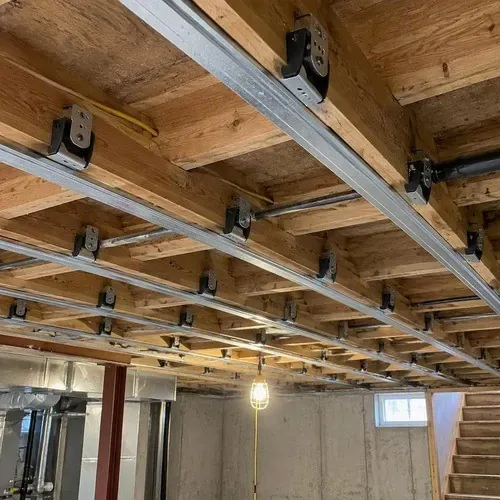
There is no single soundproof sheet that fixes a noisy room. Specialty boards help, but only as part of a complete wall or ceiling assembly.
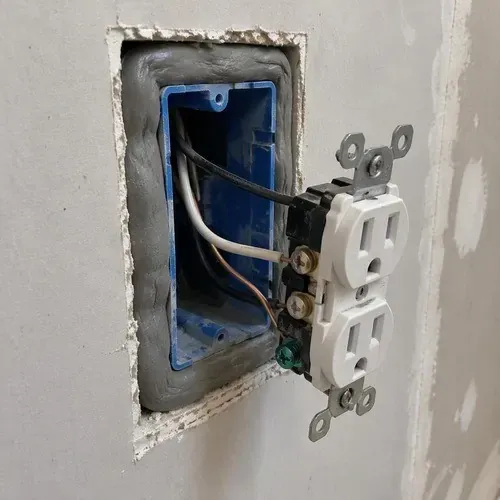
Four things do the real work: mass, decoupling, damping and absorption. Then flanking paths have to be closed, because sound slips through outlets, door undercuts, pot lights and shared ductwork.
Skip the flanking details and even an expensive wall underperforms. We treat them as part of the job.
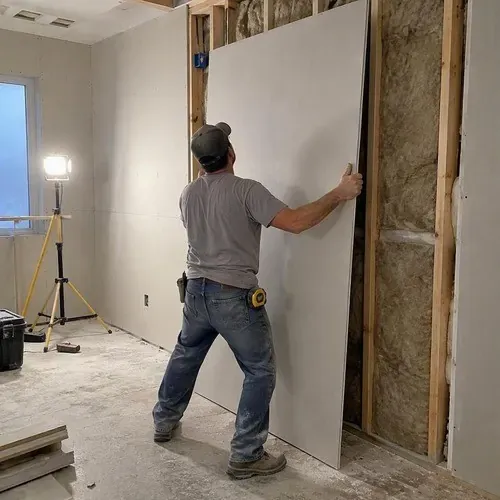
Private calls and sleeping children need quiet walls. A decoupled or damped partition makes a noticeable difference.
Our most requested job by far. Isolation clips, hat channel and mineral wool keep footsteps and TV noise from travelling between floors.
Adding a decoupled layer on your side of a shared wall cuts voices and music from next door without touching the neighbour's side.
Converted houses near Queen's and St. Lawrence College often have thin walls between units. Better separation means fewer complaints and better tenants.
Double layers, damping compound and isolation clips keep bass and loud playback contained in the room.
Mineral wool and heavier board around furnaces, pumps and water heaters take the edge off constant hum in finished basements.
Free written quotes with the finish level spelled out.
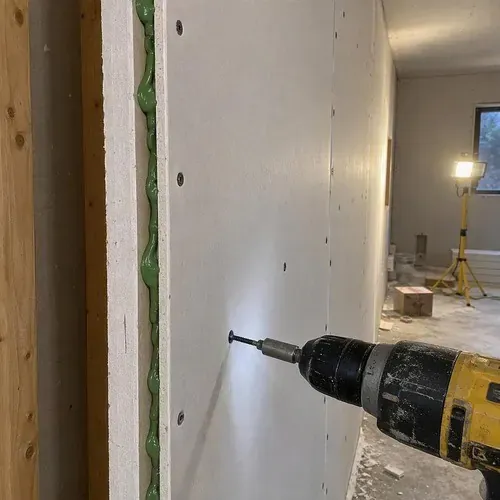
Heavier walls resist vibration. A second layer of 5/8 in. board, with joints staggered from the first, is one of the most cost-effective upgrades.
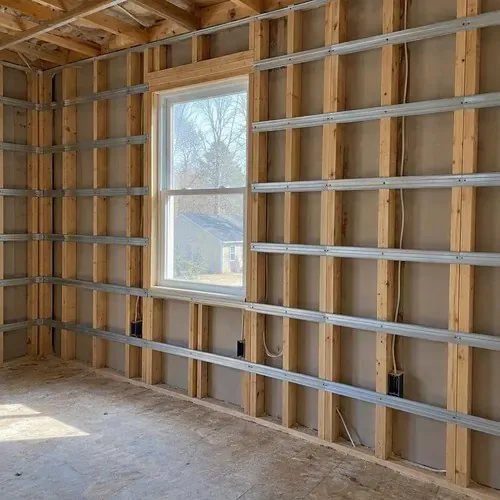
Decoupling separates the board from the framing so vibration cannot pass straight through. Isolation clips with hat channel give the most reliable result.
Installed wrong, resilient channel makes a wall worse. A single screw through the channel into a stud, or a cabinet hung on it, short-circuits the whole system.
A damping compound such as Green Glue between two layers of board turns vibration into tiny amounts of heat. It works especially well on low-frequency noise like voices and bass.
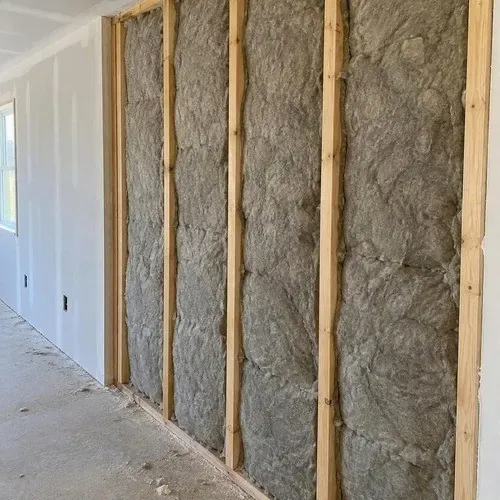
Mineral wool such as Rockwool Safe'n'Sound absorbs sound inside the cavity so it does not resonate. It also adds fire resistance.
Sound Transmission Class (STC) measures how well a wall blocks airborne sound. Higher is quieter. For reference, the Ontario Building Code requires STC 50 between separate dwelling units.
| Typical STC | What you hear through the wall | Example assembly |
|---|---|---|
| About 33 | Normal conversation is easy to follow | Single wood stud wall, 1/2 in. board each side, empty cavity |
| About 38 to 40 | Loud speech is understood, normal speech is muffled | Same wall with insulation in the cavity |
| About 45 | Loud speech is heard as a murmur | Staggered studs or resilient mounting with insulation |
| About 50 to 55 | Loud speech is not heard; loud music faintly | Isolation clips, mineral wool, double 5/8 in. board |
| 55 and up | Most household noise is gone; heavy bass may still be felt | Clips, double board with damping compound, sealed penetrations |
These figures are typical lab values. Real rooms usually perform a few points lower because of flanking through floors, doors and ductwork.
Soundproofing is priced per square foot of wall or ceiling, and the assembly type drives most of the cost. A second layer of board with damping compound costs far less than isolation clips with double board and new insulation.
One honest note: treating a single wall rarely delivers the quiet people imagine. Sound travels through the ceiling, floor and doors too, so we will tell you which surfaces actually need work.
Straight answers to the questions we hear on site visits every week.
It helps, but it is not magic. Specialty boards with a damping layer perform well, and they work best as part of a full assembly with insulation and sealed edges.
Yes. We can add a second layer of board with damping compound over the existing wall. For a bigger improvement, the old board comes off so we can add insulation and isolation clips.
It depends on how many walls and whether the ceiling is included, plus the assembly. We price each option so you can compare cost against expected results.
Only a little. Insulation absorbs sound in the cavity, but without decoupling the ceiling board still vibrates with the floor above. Clips and channel make the bigger difference.
A well-built assembly can take a wall from hearing normal conversation to hearing only loud sounds faintly. We will give you a realistic expectation for your specific room before you commit.
Soundproofing works hand in hand with drywall insulation and basement drywall. Separate partitions can be framed with steel studs, and new rooms can be designed quiet from the start with our residential drywall installation service.
Tell us what noise you are dealing with, which room, and whether walls are open or finished. We will recommend the assemblies that suit your budget and explain what each will achieve.