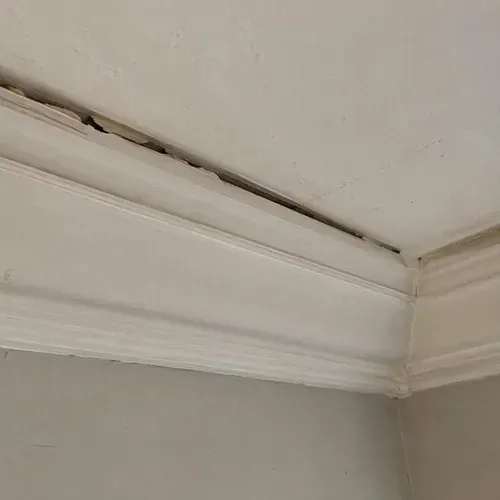
Cracked and Separated Runs
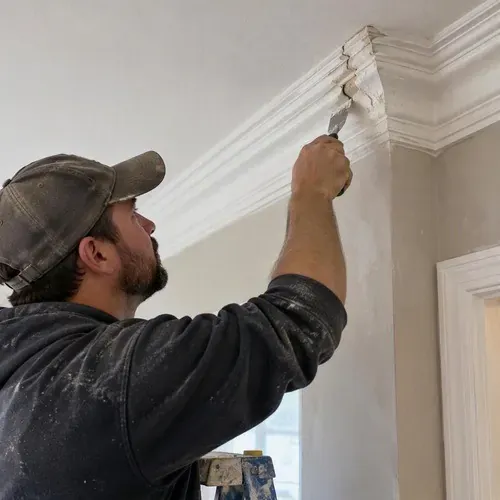
Movement at the wall-ceiling junction opens the cornice first. We secure the run, fill the gap with setting plaster and re-profile the joint.
Kingston Drywall Pros repairs and restores plaster crown moulding, cornices and ceiling medallions in the century homes of Kingston and Eastern Ontario. This is restoration in real plaster, not replacing original detail with MDF crown.
A plaster cornice is a moulding run in place along the wall-ceiling junction, or cast in sections and set into the corner. Many of Kingston's 19th and early 20th century houses still have them, often cracked, overpainted or missing a length.
Every cornice job starts with an on-site assessment, because no two profiles are the same and the condition of the run decides the method.
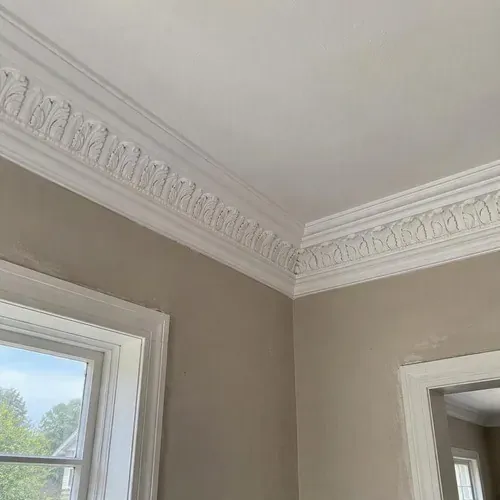
Plaster crown moulding repair is restoring damaged ornamental plaster so the run looks continuous and original again. We keep every sound section, repair what is damaged and recreate what is missing from your own profile.
It is for owners of heritage and century homes, buyers restoring an older house and anyone who wants to keep original detail rather than replace it. Our ornamental work includes:
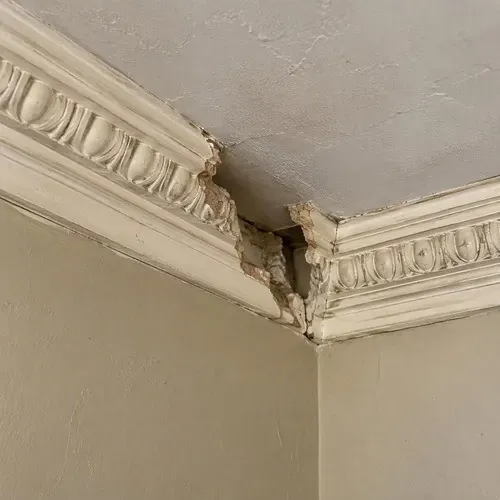
Ornamental plaster fails in six typical ways, and each needs a different repair.
Movement at the wall-ceiling junction opens the cornice first. We secure the run, fill the gap with setting plaster and re-profile the joint.
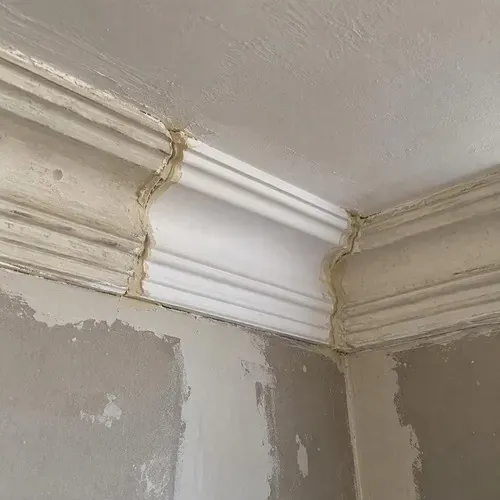
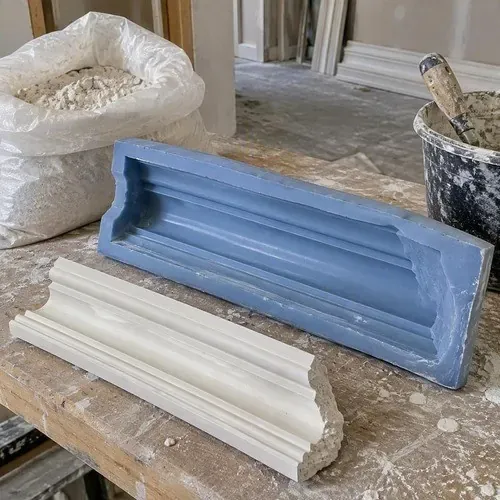
A replacement is cast from a mould of your own profile, so it matches the original run exactly, then set and blended.
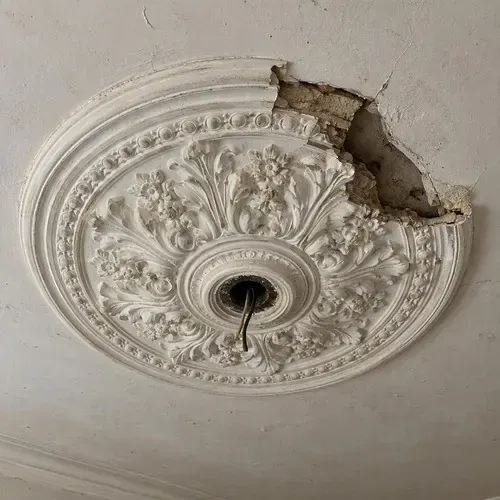
Chipped petals and broken rims are rebuilt by hand or recast from an intact part of the same medallion.
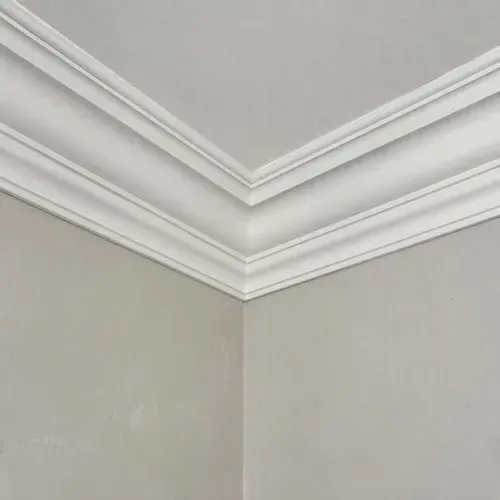
Corners are the hardest part of any cornice repair. They are mitred by hand so the profile turns cleanly.
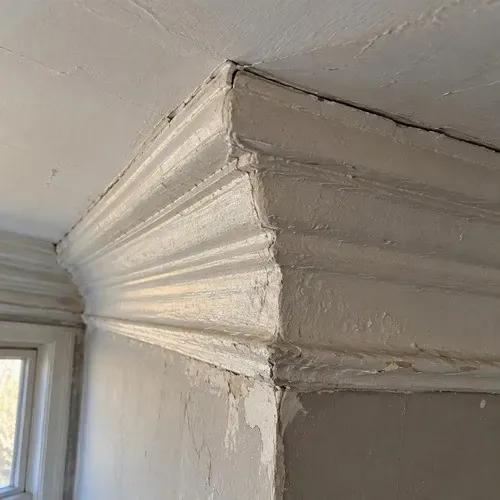
A century of paint softens sharp detail into blobs. Careful stripping often brings the original profile back without recasting.
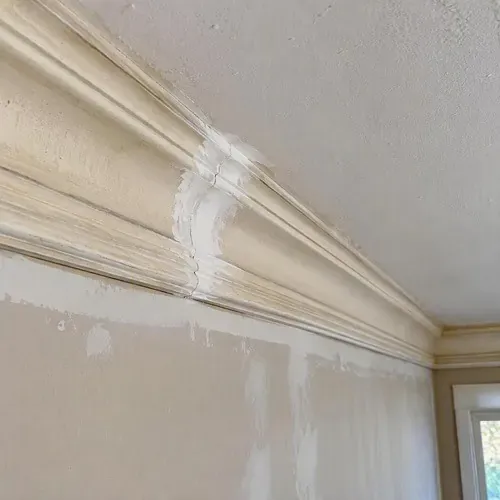
Wet plaster softens and lets go. Failed material is removed, the area dried fully and the profile rebuilt.
Free written quotes with the finish level spelled out.
Profile matching runs in four steps and is what makes a recast section indistinguishable from the original.
A profile is taken from a sound section of the run, or a silicone impression of enriched detail.
A running mould is cut for plain profiles; enriched detail gets a flexible reverse mould.
The section is cast on the bench or run in place with plaster of Paris or lime-based plaster.
The new piece is set and the joints filled and re-profiled by hand until the seam disappears.
Most jobs combine methods: cast sections for missing lengths and in-place repair for the rest. Here is how the options differ.
| Option | Best for | Trade-offs |
|---|---|---|
| Repair in place | Cracks, small chips, separated joints, short missing lengths | Lower cost; work done in the room over a few visits |
| Cast and fit | Long missing runs, broken enriched detail, medallion parts | Higher cost; most work off site, less time in your home |
| Gypsum plaster (plaster of Paris) | Most castings and repairs | Sets in minutes to hours and holds crisp detail |
| Lime-based plaster | Repairs to original lime work | Slower to cure, more flexible and compatible with old lime plaster |
Send us a few photos for a faster estimate.
Usually not for interior plaster, but it depends on the designation. Kingston has a substantial heritage register and conservation districts including Old Sydenham and Barriefield, and work on designated properties can need a permit under the Ontario Heritage Act.
Check with City of Kingston heritage staff before work starts. We provide the scope and method details they ask for.
Cornice repair is priced per linear foot, and medallions and corner blocks per piece. Every profile is quoted individually because detail, size and condition vary so much.
This is the one service we cannot price from a photo. A site visit is needed to see the profile, check how sound the run is and choose between repairing in place and casting.
Straight answers to the questions we hear on site visits every week.
Yes. We take the profile directly from your existing moulding, so it does not matter whether anyone still manufactures it.
Often, yes, at least up front, because MDF or foam crown is quicker to install.
What you lose is depth, crisp detail and original fabric, and new crown rarely matches the scale of the room. In heritage homes that loss usually costs more in value than it saves.
Gypsum plaster sets within hours but should dry fully first, typically a few days to a week depending on depth and humidity. Lime-based plaster takes longer.
Usually. Badly damaged or loose medallions may be taken down, repaired on the bench and reinstalled.
Talk to a drywall specialist, not a call centre.
Cornice work usually goes hand in hand with plaster repair on the walls below and ceiling repair on the plaster above.
We also restore ornamental plaster in Brockville and Gananoque. Learn more about our team.
Ornamental plaster starts with a conversation, not an instant quote. Book a consultation visit and we will assess the moulding, explain the options and follow up with a written proposal.