Stipple and Popcorn
Stipple is a sprayed texture with polystyrene or vermiculite aggregate. Sprayed stipple is matched with a hopper gun and stomped stipple with a brush, choosing fine, medium or coarse aggregate.
A patched textured ceiling that looks like a patch is almost worse than the damage. Kingston Drywall Pros repairs and matches stipple, knockdown, orange peel and swirl textures on ceilings and walls throughout Kingston and nearby towns.
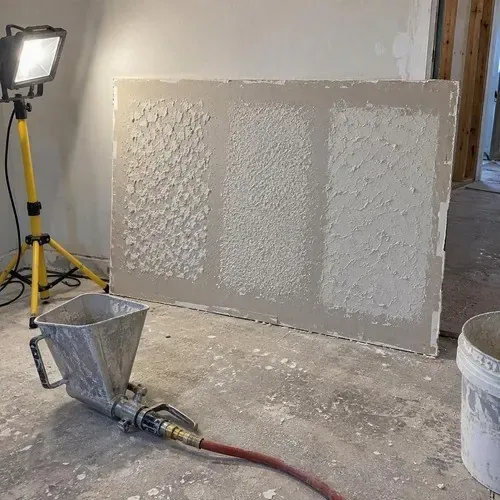
Texture matching is about reproducing how the original finish was applied: the aggregate size, the tool, the spray pressure and the timing. We test every texture on scrap board in the same light before it goes near your ceiling.
This page is for people who want to keep their texture and make damage disappear. If you would rather the texture were gone altogether, see popcorn and stipple ceiling removal.
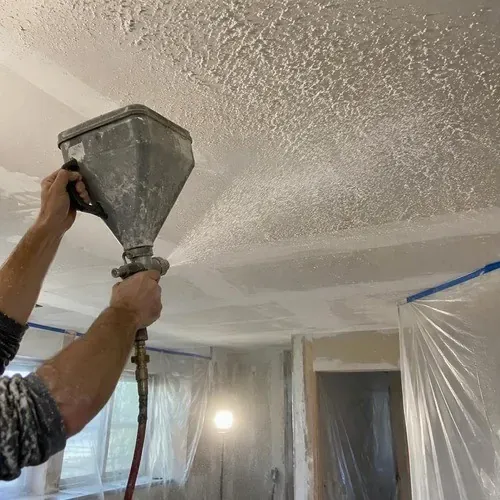
Textured ceiling and wall repair means fixing damage in a textured surface and re-creating the texture so the repair blends into the original. It covers patches, cracks, water stains and fixture holes on both ceilings and walls.
It suits homeowners who like their textured ceilings, sellers who need damage gone before listing, and landlords repairing between tenants. Each repair includes:
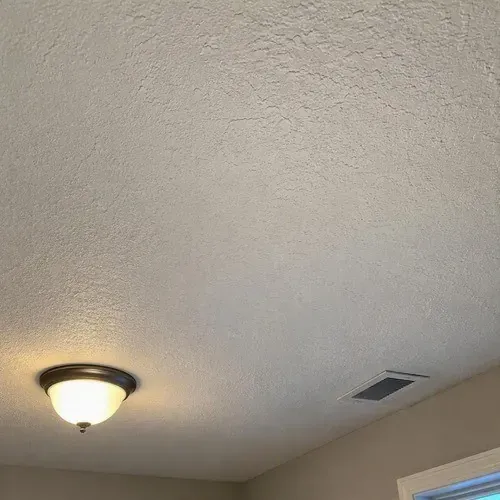
Each texture was applied a particular way, and it has to be matched the same way.
Stipple is a sprayed texture with polystyrene or vermiculite aggregate. Sprayed stipple is matched with a hopper gun and stomped stipple with a brush, choosing fine, medium or coarse aggregate.
Knockdown is sprayed compound that is left to flash off, then flattened with a wide blade. Timing is everything, which makes it the hardest texture to match by hand.
Orange peel is a fine sprayed dimple common on walls in apartments and newer homes. We adjust compound thickness, air pressure and tip size until the dimple size matches.
Swirl is a hand-brushed pattern of overlapping arcs, common in Kingston's 1960s and 1970s houses. We study the arc and spacing, then brush it into the repair by hand.
Skip trowel is compound skimmed with a trowel so it skips and leaves random flat patches. We blend new trowel marks into the existing rhythm rather than creating a new pattern.
Some walls get their texture from paint with sand mixed in. We rebuild the surface, then match the texture in the finish coat.
Free written quotes with the finish level spelled out.
A texture repair runs in five steps, and the test panel is the one most contractors skip.
We check the texture type, aggregate size, whether it was sprayed or hand applied, and whether it is painted.
Damaged board or plaster is cut back, patched and coated flat before any texture goes on.
We spray or brush the texture on scrap board and compare it to your ceiling in the same light.
Texture is applied and blended gradually into the existing surface instead of stopping at a hard edge.
A primer evens out absorption so the repair does not show as a dull or shiny spot after painting.
Texture patches show for four reasons: the wrong aggregate size, a hard edge where new texture stops, the wrong spray pressure, or missing primer. Daylight raking across a ceiling exposes all four.
Aggregate coarseness varies by era and manufacturer, and nozzle distance changes the pattern completely. That is why we match on a test panel first rather than experimenting on your ceiling.
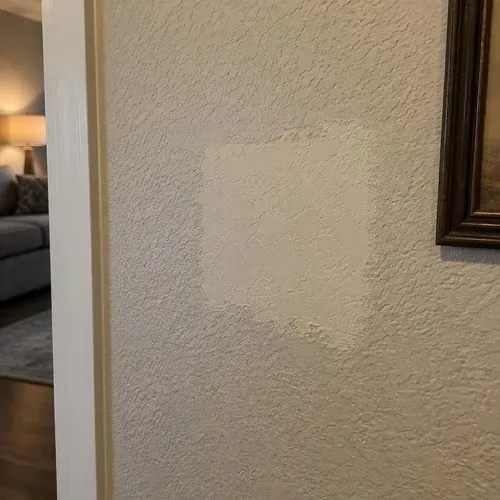
Re-texture the whole ceiling when the damage covers more than about a third of it, the old texture has yellowed, or the texture was made with tools nobody uses any more. In those cases a patch will never truly blend.
A full re-texture costs more than a single patch but less than three failed attempts, and the whole surface ends up uniform.
Send us a few photos for a faster estimate.
Painted texture costs more because new texture does not bond well to old paint and the patch has to match years-old sheen. That means a bonding primer first and more finishing at the end.
We will tell you at the assessment if your ceiling has been painted, so it is never a surprise on the invoice.
Texture repairs are priced per patch or per full ceiling, depending on these variables.
| Variable | Effect on price |
|---|---|
| Texture type | Knockdown and hand swirl take longer than sprayed stipple or orange peel. |
| Painted or bare | Painted texture needs a bonding primer and sheen matching. |
| Ceiling height | Higher ceilings need staging or scaffold. |
| Room contents | Rooms we have to empty and protect take longer. |
| Patch count | Several patches in one room share set-up and clean-up time. |
Straight answers to the questions we hear on site visits every week.
In most cases, closely enough that you cannot pick it out in normal light. If a perfect match is not possible, we tell you before we start and discuss re-texturing the whole surface.
Usually the aggregate size or pattern was wrong, the edge was not feathered, or the patch was painted without primer. Low-angle daylight exposes all three.
Yes. We patch, texture and blend the repair area, then prime it. Painting the full wall afterwards gives the most even result.
Ceiling texture applied before about 1990 should be tested before it is disturbed. A positive result means a qualified abatement contractor must handle it first; see popcorn ceiling removal.
Talk to a drywall specialist, not a call centre.
Texture repair often follows other work. See drywall repair for the patch itself, ceiling repair for sagging or water damaged ceilings and stucco repair for stucco ceilings and exterior stucco.
Send a close-up photo of the texture with a coin for scale, plus a wider shot of the damage. That tells us the texture type and aggregate size before we visit.